Yes, high pressure washing can damage a roof. It can strip the surface off tiles, crack brittle ones, force water under the roofing and wash away the mortar that holds ridge capping in place. A small gain in looks is not worth a repair bill.
A quick word on terms. Shingles is mainly a US word for roof covering. Most Newcastle homes have concrete or terracotta tiles or Colorbond steel instead. The risks are much the same, so this guide covers all of them.
What does high pressure water actually do to a roof?
A pressure washer can throw water at a force that cuts through paint and moss alike. On a roof, that force does not stop at the dirt.
- It strips the surface. Concrete tiles carry a thin coating that gives them colour and protects the tile underneath. Strong pressure removes it, and a bare tile soaks up water and grows moss faster.
- It cracks and chips. Older terracotta and concrete tiles can become brittle. A hard jet at close range can crack them, and you may not see the damage from the ground.
- It drives water backwards. Roof tiles are built to shed water that falls down on them. A jet can push water up and under the overlaps, into the batten space and then into the ceiling.
- It washes out the bedding. Ridge and hip capping sits on mortar or flexible pointing. High pressure can loosen it, and a loose cap can slip or let wind-driven rain in.
What roofs are common in Newcastle?
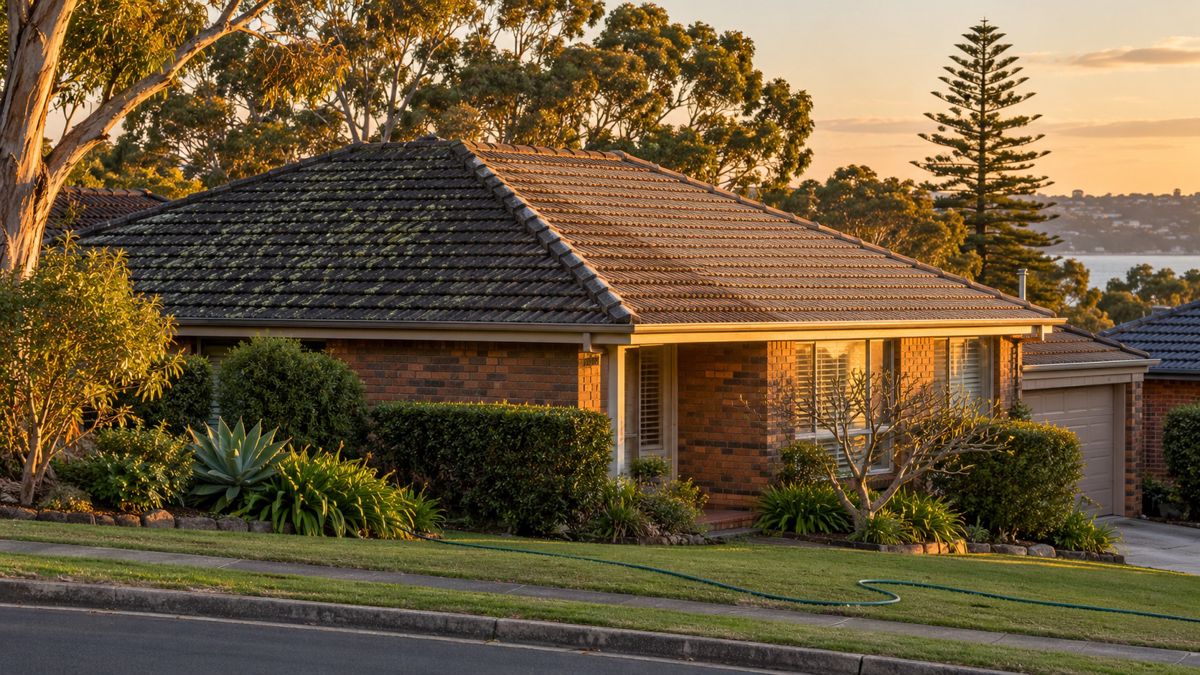
The Newcastle area has a mix of roof types, and each reacts differently to pressure.
Concrete tiles
Common on homes built from the 1970s onward. They are tough in general, but the surface coating is thin and can be damaged by pressure.
Terracotta tiles
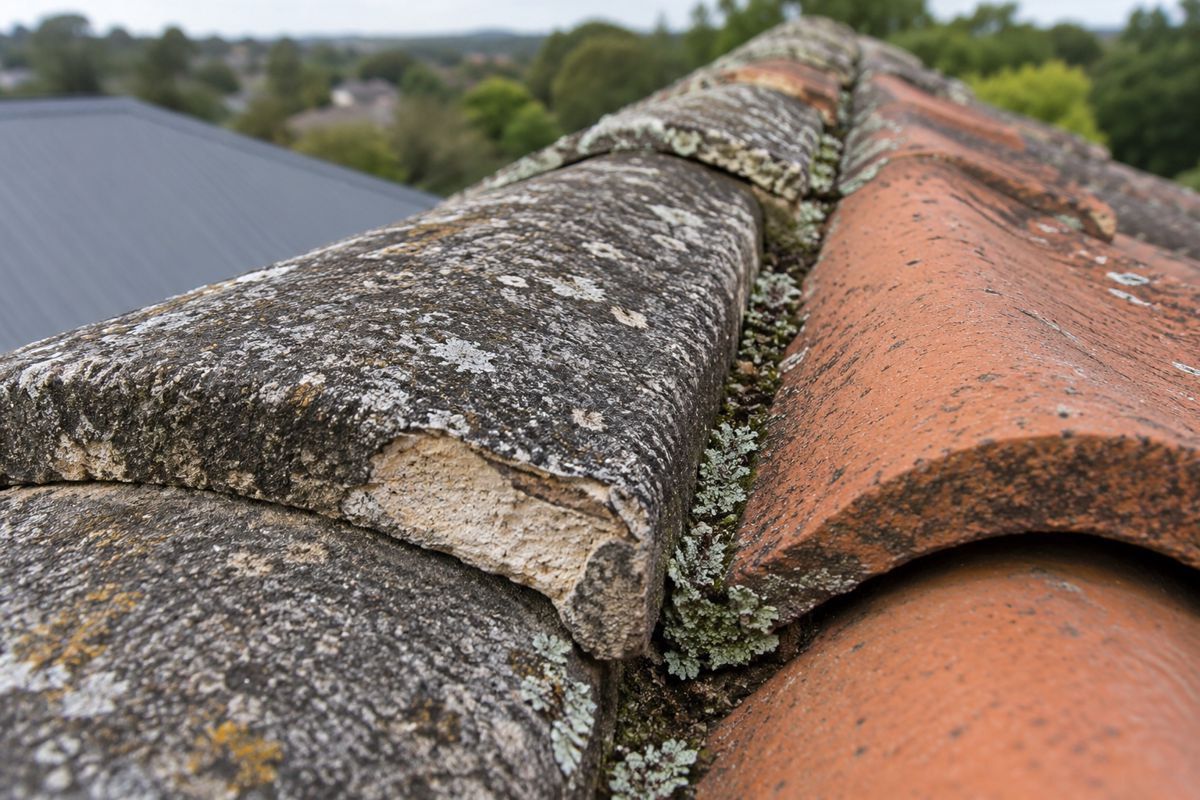
Found on many older homes and on some newer ones. They hold lichen well. They can crack when walked on carelessly or hit by a strong jet.
Colorbond and metal roofs
These are painted steel sheets. Strong pressure can damage the paint, and salt air near the coast can then speed up corrosion at the exposed edges.
Which roofs must never be high pressure washed?
Older cement sheet roofing from before the late 1980s can contain asbestos. Cement sheet that has weathered over many years sheds fibres more easily, and pressure washing, scrubbing or scraping can release them. In NSW there are strict rules about working on asbestos materials, and high pressure cleaning is not an acceptable method for them.
If your home is older and you are not sure what the roof is made of, do not guess. Ask a licensed asbestos assessor to look at it before anyone cleans it. The same caution applies to old fibro walls and eaves.
What damage shows up after a bad wash?
Some damage appears right away. Other damage shows weeks later.
- Patchy, faded or streaky tiles where the coating was stripped.
- Cracked or broken tiles lying in the gutters.
- Ceiling stains or damp spots after the next heavy rain.
- Loose or shifted ridge capping and gaps in the pointing.
- Moss and lichen growing back faster than before.
- Grit and tile debris clogging gutters and downpipes.
Water that enters under the tiles can soak insulation and timber. That leads to mould in the roof space, and it can take months to notice. Strong storms, such as an east coast low, then find the weak spots and make things worse.
What is the safer way to clean a roof?
The method most roof cleaners recommend for tiles and painted metal is a soft wash. It treats the cause of the dirt rather than blasting it off.
- Inspect first. Look for cracked tiles, loose capping, failed pointing and anything on the roof like solar panels.
- Protect what is below. Cover or rinse garden beds, close windows and protect or disconnect downpipes that feed a rainwater tank.
- Apply a cleaning solution at low pressure. It kills the moss, lichen and algae at the root.
- Let it work. The solution needs a little time on the surface to do its job.
- Rinse gently. Water carries the dead growth off the roof and into the gutters, which are then cleared.
The full result often shows after a few rain events, as the dead growth fades. Because the method does not remove the surface, the roof is not left bare, and the clean usually lasts longer.
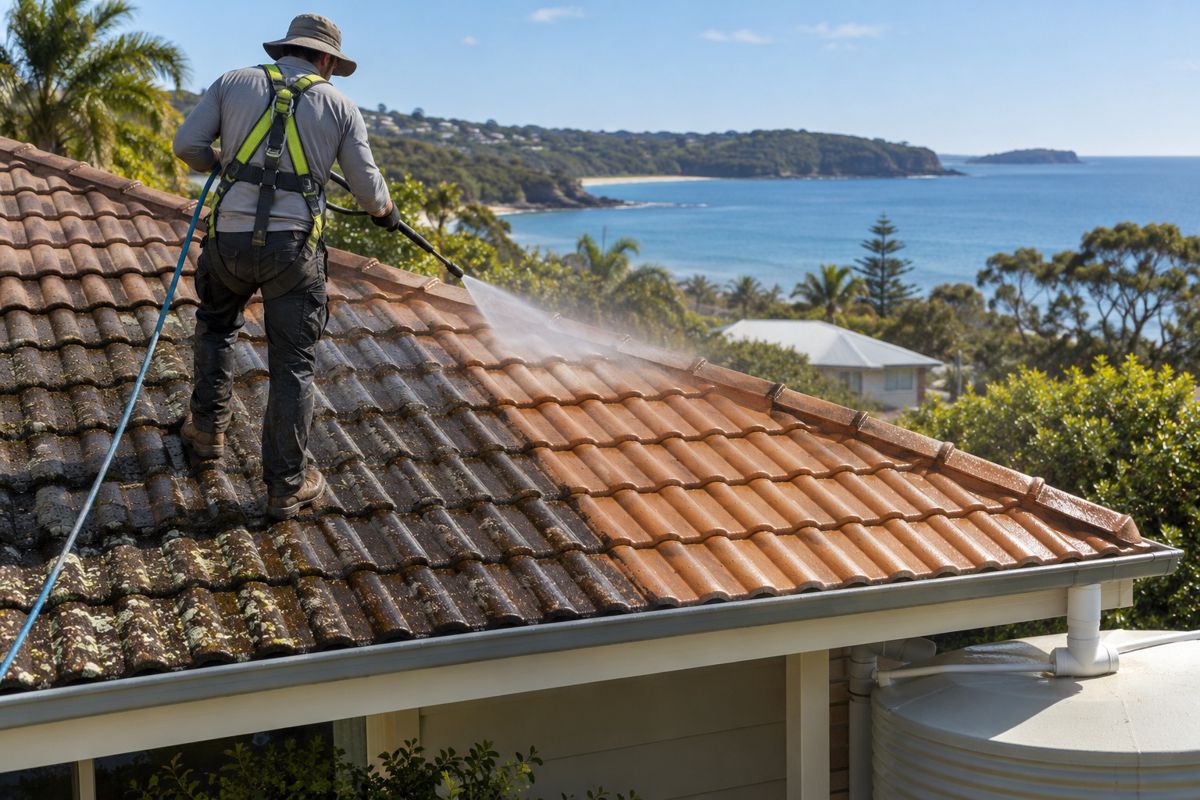
It also helps to think about timing. Roof cleaning is best done in dry, calm weather with no heavy rain forecast for the day. Hot, windy days dry the solution too fast and can leave streaks, and wet roofs are harder and less safe to work on. In Newcastle, late spring and early autumn often give a good run of settled days, though the weather can turn quickly on this coast.
How do you choose a roof cleaner?
Ask a few plain questions before you book.
- Do you soft wash tile and Colorbond roofs, or do you use high pressure?
- How will you protect my rainwater tank and my garden?
- How do you get onto the roof safely and what fall protection do you use?
- What will you do if you find cracked tiles or asbestos materials?
- Is the quote in writing, and what does it include?
Be wary of anyone who promises to blast your roof clean in an hour. It is also fair to ask for proof of licences and insurance. Professional roof work should come with both, and you should check them rather than assume.
Where to start
A cleaner roof is nice, but the real goal is a roof that lasts. Gentle cleaning protects the surface, keeps water moving into the gutters and helps you spot small faults early.
If your roof has gone green or black, check for cracked tiles and loose capping from the ground, and take a few photos. Do not climb up yourself, and do not hire a pressure washer to do it. Roof falls are one of the most serious risks in home maintenance.
Our roof cleaning page explains how we approach tile and Colorbond roofs in Newcastle. Call (02) 5550 8114 or send the short form with photos for a written quote.